

- Creating components
Components are pieces of HTML, CSS, and JS that can be added to posts or other components. They allow for customization by giving users custom fields to input data into. This post will discuss all parts of a component.
Title
The title is required, and must be 4 to 20 characters long.
Description
The description is required, and must be 20 to 255 characters. It appears in searches, so it should describe the purpose it serves, and any benefits and limits to using it. For instance, if you were creating a bar graph, it would be useful to mention if it allows for certain customizations such as colors of the bars, and if there is a limit on the number of bars that may be added.
Details
The details section is optional. It displays after a component has been selected, and above the data that is requested from the user. Relevant info about how the component works, and customization options go here. Continuing with the bar graph example, you could write that if a bar color is not specified, blue is used, and that for customization, the bars have the class 'bar' that may be edited by adding a
<style>element to their post.Line breaks are conserved in details, so you can separate topics into different parts.
User-Entered Data
User-Entered Data is also optional. When used, each field in the row is required.
All user-entered data becomes a part of an object for your code. Each component has a unique id, and this id is embedded into the source variable name of this user-entered data object. If the component's id is
iOK0H, the source variable for your component isdataiOK0H(will be used as an example throughout this doc). This is still the variable name you should use in your code when accessing component data.Each component also has a config object named
dataiOK0H_config. It includescreated,previewHtml,componentId, andlocalId. On the full post page it also includesfragment, which is the current url fragment without the leading#.Store Data
We allow saving data per user via the store data field. To update the store data field for a user, see the "Global Functions" -> "Store Data" section. You can edit the rules and keys for a store data field by clicking the "Edit Fields and Rules" button. The data is provided to a component in this format (if component id is
iOK0Hand property name ispollValues):dataiOK0H['pollValues'] = { "userInput": { "poll_question": [null,1], "poll_user_count": 1 }, "userInputMeta": { "created": "2026-07-07 05:52:00", "modified":"2026-07-07 05:52:00" }, "aggregateValues": { "poll_question": [null,1], "poll_user_count": 1 } };userInputMeta's date and time properties are when theuserInputvalues were saved for this user. They are in UTC. If no values have been supplied for this user, it will look like:dataiOK0H['pollValues'] = { "userInput": { "poll_question": [], "poll_user_count": null }, "userInputMeta": { created: null, modified: null }, "aggregateValues": { "poll_question": [], "poll_user_count": null } };Component Collisions
To allow for multiple instances of your component to be added to one post, every instance of
dataiOK0His still rewritten before your code runs so that each instance gets its own runtime variable. UsedataiOK0Hin your source code so the system can rewrite it correctly.When a component is added to a post, it is given a localId (starts at 0 and auto-increments). This localId is visible in the code editor, so the user can use it if necessary (described later). If your component is the third added, it will have a localId of 2. Before your code is run, instances of
dataiOK0Hare rewritten to a runtime-specific variable that includes the localId, and it may also include an added random string. Because of that, do not depend on the final rewritten variable name being stable across renders.If you need stable values for ids, class names, fragment targets, or other generated markup, use
dataiOK0H_config.componentIdanddataiOK0H_config.localId.Global shared styles
Loading Icon
You can show a loading icon by adding classfg-loading-iconto an element with no other children. A loading icon is rendered with css, and by default is 30px wide and 30px tall, but you may customize this. You may also customize the colors of it.We will be adding more global shared styles so components can all have the same look and feel. Please check back continually for updates to this section.
Config Values
When a component is rendered, the site also exposes a runtime config object. This gives your component a few useful values about the current render context, like the component instance id and the current max render height.
Example:
window.dataAB12_config = {
   created: 1713990000000,
   previewHtml: "<p>Example post content</p>",
   fragment: "",
   maxHeight: 300,
   componentId: "AB12",
   localId: "0",
};
Global Functions
Store Data
If you choose the Store Data field type, that field must be at the top level. Store Data lets a component load saved values for the current user and aggregate values returned by the backend. The configured keys for that field become data properties, and those keys may only contain letters, numbers, and underscores.
At runtime, call
window.fgStoreData. It return a Promise. On success, the requested property on your component data object is updated with an object containinguserInputandaggregateValues. In this case,scoresis the "Data Property Name" value for thisStore Datafield in the User-Entered Data.window.fgStoreData('load', 'dataiOK0H', 'scores').then(function () { console.log(dataiOK0H.scores.userInput); console.log(dataiOK0H.scores.aggregateValues); });To save data, call
window.fgStoreDatawith an additional parameter, which must be an object with auserInputproperty. The properties allowed on theuserInputare set for the field by clicking the "Edit Fields and Rules" button, and adding to theFieldssection. TheKeyfor each field make up the exact properties we will allow.window.fgStoreData('save', 'dataiOK0H', 'scores', { userInput: { score: 7 } }).then(function () { console.log(dataiOK0H.scores.userInput); });Saving requires the user to be logged in. In previews, Store Data uses the configured test payload until the component is attached to a post.
window.fgStoreDatareturns a Promise and may reject if the request fails, the field cannot be identified, the supplied data is invalid, or a save is attempted while logged out. Components should handle these errors.window.fgStoreData('save', 'dataiOK0H', 'scores', { userInput: { score: 7 } }).then(function () { console.log(dataiOK0H.scores.userInput); }).catch(function (error) { console.error(error.message); });When a logged-out user attempts to save, the signup flow is opened and the Promise rejects. Loading does not require the user to be logged in.
Force Signup Flow
window.fgRequireSignupThis function triggers the signup modal flow. Use it when interacting with buttons that will later require data to be saved
Add Component to New Post
window.fgAddComponentToPostThis function opens the new post page and opens the Add Component modal with the calling component selected. Pass the component's config object so the correct component can be identified.
window.fgAddComponentToPost(dataiOK0H_config);
You may also pass the component id directly:
window.fgAddComponentToPost(dataiOK0H_config.componentId);
The function returns
trueApproval of components
Unlike posts, components cannot be used or seen in search results until they are approved. This is to prevent malicious code from becoming widespread before being deleted, and potentially diminishing the UX for users visiting posts that had a component deleted retroactively. To ensure your component is approved, refrain from using external JS files that could be changed maliciously in the future. Only repositories on unpkg.com - like jQuery, React, and other npm packages - will be allowed. Aside from common social media, all other script urls are blocked by our Content-Security-Policy. If you have another site you'd like to include scripts from, please submit feedback (in the dropdown menu in the upper right hand corner when you log in).
Add the following to enable react:
<script src='https://unpkg.com/react/umd/react.production.min.js'></script> <script src='https://unpkg.com/react-dom/umd/react-dom.production.min.js'></script>
When testing, use the following:
<script src='https://unpkg.com/react/umd/react.development.js'></script> <script src='https://unpkg.com/react-dom/umd/react-dom.development.js'></script>
Versioning
When a new version of a component is approved, changes will not automatically propagate to posts using that component. Posts will have to be updated individually. This was done because updated components may no longer fit in as well with the post, and can change user-entered data formatting.
Coding details
Use
dataiOK0Hfor your component's actual data. UsedataiOK0H_config.componentIdanddataiOK0H_config.localIdwhen you need stable html ids, class names, or fragment targets.const sectionId = `${dataiOK0H_config.componentId}-${dataiOK0H_config.localId}-results`;On the full post page,
dataiOK0H_config.fragmentcontains the current url fragment without the leading#. This can be used if your component needs to react to a specific fragment when the post is opened.Clicks in list display previews
When a component is displayed in a post list (
renderContextoflist-display), clicking a non-interactive part of the component opens the full post.Standard interactive elements do not trigger this navigation. This includes links, buttons, inputs, textareas, selects, labels, summary elements, elements with role="button" or role="link", and editable content.
Use a native interactive element when possible:
<button type="button">Change View</button>If a custom element handles clicks but is not otherwise recognized as interactive, add
data-component-interactive="true"to it or an appropriate ancestor:<div data-component-interactive="true" role="button" tabindex="0" > Change View </div>
This attribute prevents the post list click bridge from treating the interaction as a background click. It does not add button accessibility or keyboard behavior, so native buttons are preferred.
Linking to fragments in posts
If you want a button or link inside a rendered component to open the full post and jump to a specific element, add
data-click-bridge-fragmentto the clicked element. The value should match the target element's id, with or without the leading#.<button data-click-bridge-fragment='results-section'>View Results</button> <a href='#' data-click-bridge-fragment='results-section'>View Results</a>
The target element should use a stable id, ideally one built from
dataiOK0H_config.componentIdanddataiOK0H_config.localId. If you only want to open the post without adding a hash, usedata-click-bridge-navigate.Caveats
Single Page App with Server Side Rendering
Because pages are loaded two different ways, you must plan accordingly. If you need to wait for the page to load to examine or manipulate elements, you will have to check to see if the document has loaded already before adding a window load event listener:
// when using React
componentDidMount() {
   if (document.readyState !== 'complete') {
     this.listenerSet = true;
     window.addEventListener('load', this.loadData);
   } else {
     this.listenerSet = false;
     this.loadData();
   }
}
For removing the listener in React:
componentWillUnmount() {
   if (this.listenerSet) {
     window.removeEventListener('load', this.loadData);
   }
}
Without React:
if (document.readyState !== 'complete') {
   window.addEventListener('beforeunload', function (event) {
     window.removeEventListener('load', this.loadData);
   });
}
Interactive Authoring Components
Enabling interactive authoring allows a component to replace the normal Add Component data form with a full-width interactive preview. The component can provide its own controls for updating User-Entered Data.
The optional Add Component Preview Code is appended to the component only while it is displayed in the Add Component preview. It can be used for controls and behavior needed during authoring but should not appear in the published component.
The interactive-authoring functions below return Promises. Although the global function names may exist in other render contexts, requests will reject unless interactive authoring is enabled and the component is currently running in an interactive Add Component preview.
Update User-Entered Data
window.fgUpdateUserDataupdates a User-Entered Data field. The resolved value is the value accepted after validation and sanitization.window.fgUpdateUserData( 'dataiOK0H', 'heading', 'New heading' ).then(function (result) { console.log(result.value); }).catch(function (error) { console.error(error.message); });For a field inside a repeating collection, pass its collection index as the fourth argument.
window.fgUpdateUserData('dataiOK0H', 'heading', 'Second heading', 1);Pick an Image
window.fgPickUserDataImageopens the operating-system image picker for an image field. Image uploads require the user to be logged in. For an image inside a repeating collection, supply its collection index.Opening the picker does not mean an upload has started. Use the optional
onStatuscallback to manage loading:uploading: A file was selected and uploading started.done: The upload succeeded.error: The upload failed.superseded: An abandoned picker request was replaced by a newer request.
Do not show a loading indicator or disable the image control immediately after callingfgPickUserDataImage. Only do so while the status isuploading.var imageUploadInProgress = false; function chooseImage() { if (imageUploadInProgress) { return; } window.fgPickUserDataImage({ runtimeWindowVar: "dataiOK0H", dataProperty: "image", collectionIndex: 0, // omit for a top-level image field onStatus: function (update) { imageUploadInProgress = update.status === "uploading"; document.querySelector(".image-loading-icon",).hidden = !imageUploadInProgress; document.querySelector(".image-upload-button",).disabled = imageUploadInProgress; }, }) .then(function (result) { imageUploadInProgress = false; // The image value accepted by the parent. console.log(result.value); }) .catch(function (error) { imageUploadInProgress = false; if (error.status === "superseded") { return; } console.error(error.message); }); }Operating-system file pickers do not reliably report when the user closes them without selecting a file. Therefore, there is no
cancelledstatus.If the picker is abandoned, the image control should remain clickable. When clicked again, the new request replaces the abandoned request. The old Promise rejects with
error.statusset tosuperseded. This is not an upload failure and should normally be ignored.The positional form remains supported, but does not provide status callbacks:
window
   .fgPickUserDataImage("dataiOK0H", "image", 0)
   .then(function (result) {
      console.log(result.value);
   })
   .catch(function (error) {
      console.error(error.message);
   });
Change Collection Items
These functions add, remove, or reorder repetitions of a Collection field. Collection minimum and maximum limits are enforced. The data property must belong to the parent Collection field rather than one of its child fields.
window.fgAddCollectionItem('dataiOK0H', 'rows');
window.fgRemoveCollectionItem('dataiOK0H', 'rows', 1);
window.fgReorderCollectionItem('dataiOK0H', 'rows', 0, 2);
Each collection function returns a Promise and rejects if the collection, index, or requested operation is invalid.
Displaying Component Results in Comments
Components with a Store Data field can let users include their current saved result with a comment. The user must explicitly enable this when creating or editing the comment. Results use the user’s current live Store Data rather than a snapshot.
Comment result label is required and should be a short noun or phrase, such as
vote,score, orsubmission. It appears in text such asInclude your vote with this commentand@username's vote.Comment result renderer is optional HTML, CSS, and JavaScript for displaying a small, read only version of the result. If it is empty, the full component is rendered instead.
The renderer receives the normal component data object, including the comment author’s disclosed Store Data, and the normal config object. For component
iOK0H, usedataiOK0HanddataiOK0H_config. In comment results,dataiOK0H_config.renderContextiscomment-display.var selection = dataiOK0H.pollSelection.userInput.poll_question; var selectedIndex = selection.indexOf(1); var selectedOption = dataiOK0H.options[selectedIndex];
Comment results are sandboxed and read-only. Store Data save, set, and update operations are blocked. Keep the renderer compact and exclude editing controls or unrelated component details.
Use Update preview in the component editor to refresh the comment renderer preview after changing its HTML or test data.
Only one component result can be included with a comment. The pinned Store Data component is preferred; otherwise the post must contain exactly one Store Data component.
Default Image Screenshots
A component can supply a post's thumbnail by screenshot. Enable Use a component screenshot as the post default image on the component.
If the component has a Store Data field, you can also choose when the screenshot runs: when the post is created or edited, or periodically after store data changes.
When a screenshot is taken, the component is rendered alone, and the
renderContextisdefault-image-screenshot.Put an attribute
data-fg-screenshot-contenton exactly one element. This is what the screenshot will capture. More than one of those attributes will fail the capture.<div data-fg-screenshot-content> <canvas id="chart"></canvas> </div>
After all asynchronous rendering is finished (loaded store data, charts, canvases, late layout), call
window.fgScreenshotReady(). The capture waits for this signal. If you never call it, the screenshot fails.if (dataiOK0H_config.renderContext === 'default-image-screenshot') { window.fgStoreData('load', 'dataiOK0H', 'scores').then(function () { drawChart(); window.fgScreenshotReady(); }).catch(function () { window.fgScreenshotReady(); }); }Calling it more than once is safe. Images and fonts in the component are waited for after this call, so you only need to signal when your own JS rendering is done.
Keep the screenshot target compact. Hide editing controls and other chrome when
renderContextisdefault-image-screenshot. - YouTube might become the NBA's local TV home for up to 29 teams
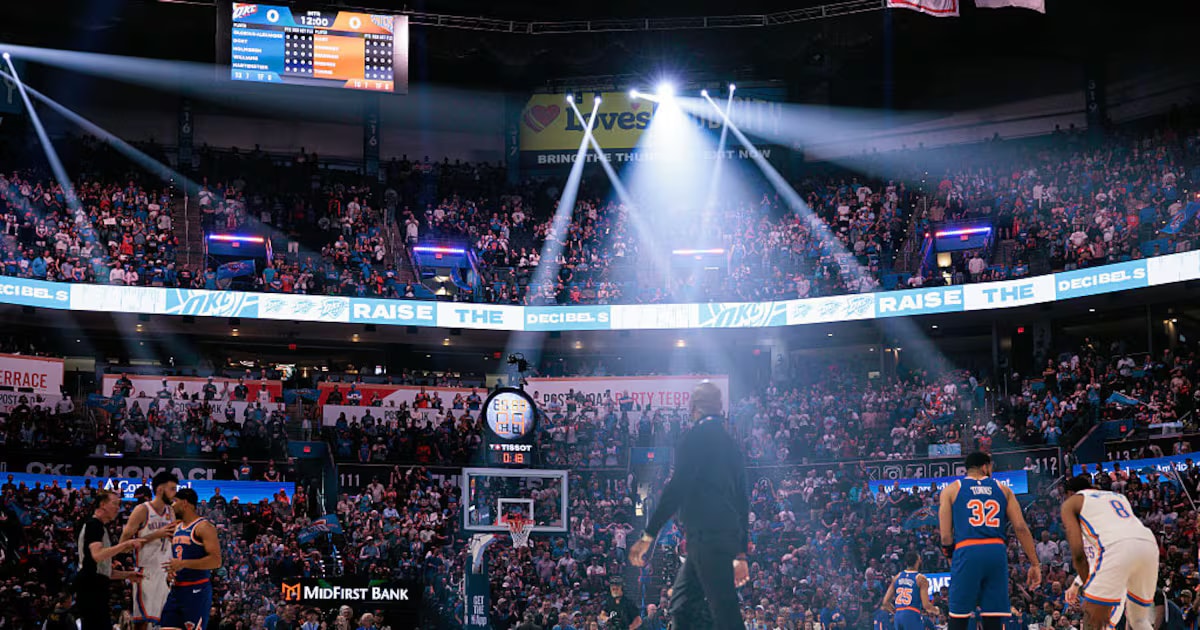
The NBA and YouTube are negotiating a deal on a local streaming hub for next season. It could start with 20 to 25 teams and eventually reach 29.
Putting local games in one app would be nice. But they would still be geofenced, while national games and League Pass stay separate. So we're getting closer to one place to watch basketball. And by one place I mean three places instead of six.
- How do you know when you're doing too much volume?
I'm hitting glutes 3x a week and ending up around 20 hard sets total. Mostly hip thrusts, RDLs, split squats and abductions.
Strength was moving up for a while but now Im just permanently sore and my last few sets feel kinda pointless. Sleep and protein are fine.
Would you cut sets first or just drop the third day entirely? Curious where everyone elses sweet spot is for actually growing
- How do yall train legs with a physical job?
Been trying to bring my legs up but work already has me climbing lifting and dragging crap around all day.
If I train legs hard before a shift I'm useless. After work my squat numbers are straight garbage. Anybody working a physical job found a split that actually works?
Thinking legs Friday night then spend Saturday walking like a newborn deer lol
- Most college degrees are a scam
Spend four years and pile on debt just to end up in some dead end office or serving coffee. Learn a real trade or run a machine instead. Youre earning decent money by 22 with zero loans hanging over you. Half those degrees teach nothing you can actually use on the job.